The Hoop Obsession Sweet 16: Players We’re Watching Closely in the NCAA Tournament. March 25, 2026. — By Bobby Gerould
Every NCAA Tournament produces breakout performances, but the players who truly shape the outcome of March are rarely just the headline scorers. At HoopObsession.com, we focus on the players whose games translate beyond highlights, the ones who consistently impact winning possessions through decision-making, defensive reliability, efficiency, and feel for the game.
With the tournament field narrowed, we’ve identified sixteen players remaining in the bracket whose performances we are watching most closely. Some are projected lottery picks. Others are glue guys who drive winning within team structure. What they share is the ability to influence games in ways that go beyond the box score. To avoid positional bias or implied ranking, the Hoop Obsession Sweet 16 is presented in alphabetical order.
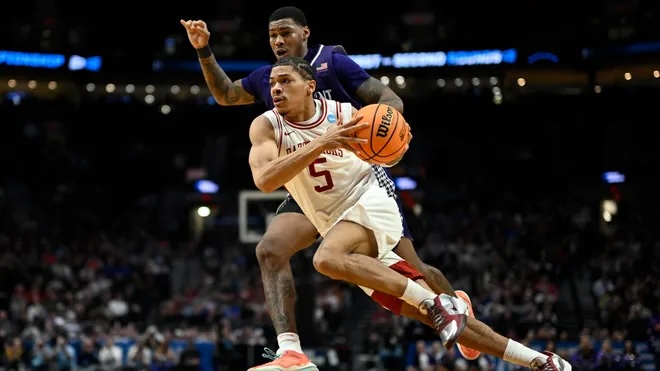
Darius Acuff Jr. — Arkansas
6'2" | 180 lbs | 6'6" wingspan | Point Guard | Born 11/16/2006Acuff is a quick, creative lead guard who consistently pressures defenses with his ability to break defenders down off the dribble. The Arkansas freshman has produced at a high level offensively, averaging 23 points and 6.5 assists per game while shooting 44.6% from three-point range. What makes that scoring output especially impressive is how well he protects the ball. Acuff owns a 3.01-to-1 assist-to-turnover ratio, an unusually strong number for a guard who carries such a heavy scoring load. Despite standing 6'2", his 6'6" wingspan gives him additional reach and helps him compete physically against larger guards.
The primary developmental question is on the defensive end, particularly when he is off the ball. His current D-diff sits at minus 6, which is a significant number and reflects lapses in awareness away from the action. That said, those types of defensive habits are teachable, especially for a young guard with his physical tools. None of this should obscure the bigger picture: Acuff is a highly productive offensive creator with rare scoring efficiency and ball security for a player tasked with generating so much offense, which is why he remains one of the players we are watching most closely in this tournament.
Amari Allen — Alabama
6'7" | 205 lbs | 6'8" wingspan | Small Forward | Born 1/26/2006Allen plays a mature, well-rounded game and already shows the defensive foundation teams look for in modern wings. At 6'7" with a solid 205-pound frame, he has the strength to handle physical matchups and the tools to hold his own at the next level. Offensively, Allen contributes across the stat sheet, averaging 11.6 points, 7 rebounds, and 3.1 assists, numbers that reflect his willingness to impact the game beyond scoring. He is a capable perimeter shooter as well, converting 35.1% from three-point range, which helps keep defenses honest. Allen’s combination of defensive reliability, positional strength, and steady decision-making gives him the profile of a wing who understands how to play within team structure, making him one of the more intriguing complementary pieces still competing in the tournament.
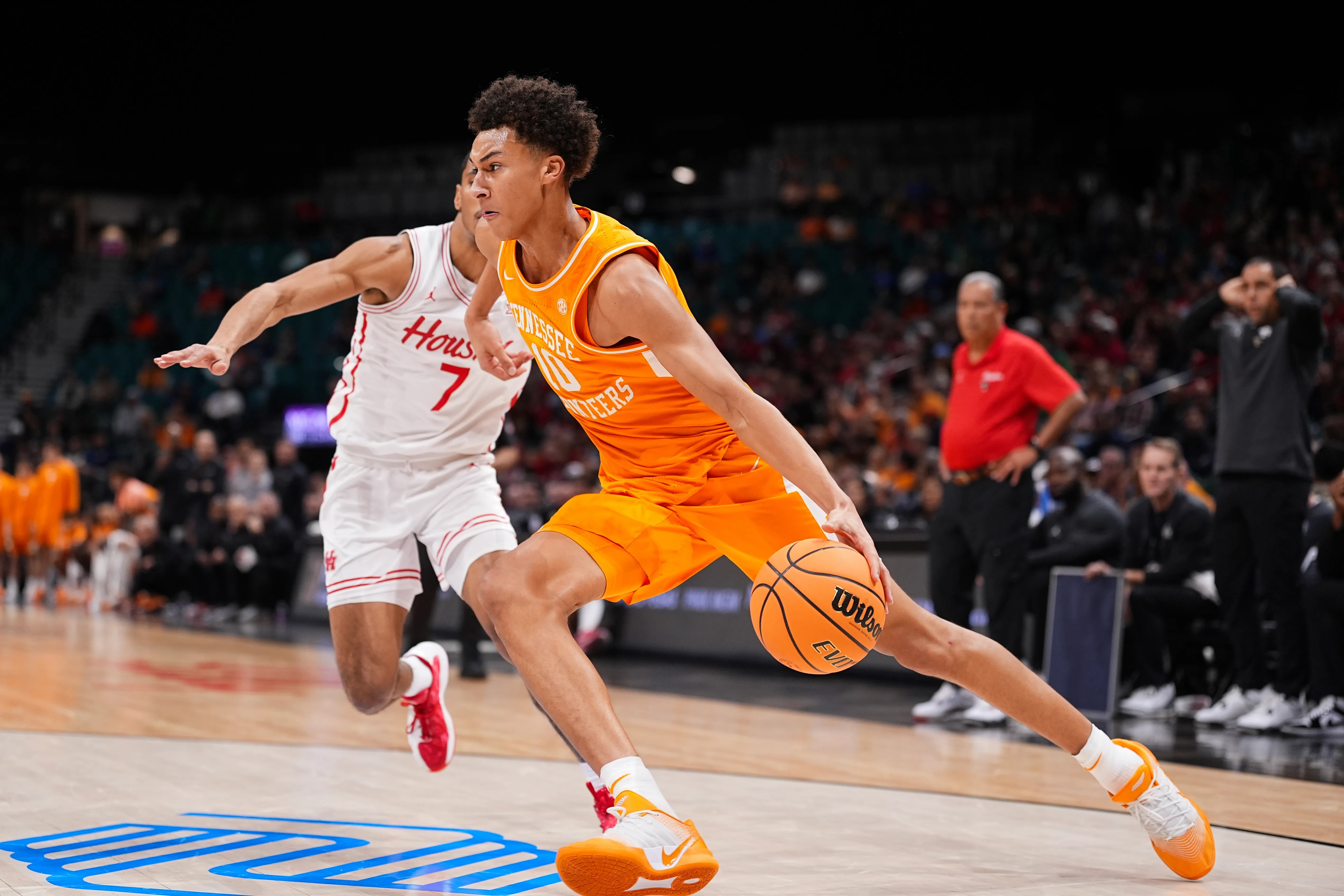
Nate Ament — Tennessee
6'10" | 207 lbs | 7'1" wingspan | LPS | Born 12/10/2006Ament is a long-term upside prospect whose physical tools immediately stand out. At 6'10" with a 7'1" wingspan, he possesses the type of size and mobility that NBA teams covet in modern forwards. However, his game today still requires significant seasoning. Ament often plays very upright, which affects his balance and consistency, and his overall efficiency reflects a player still learning how to harness his tools. He is producing 16.9 points, 6.4 rebounds, and 2.3 assists per game, but the perimeter shot remains a work in progress at 32.8% from three. His 79.2% free throw shooting suggests there may be room for growth as a shooter.
One encouraging sign is his ability to draw fouls, an area where he is already highly productive. Ament ranked 4th in the SEC in free throw attempts, showing a willingness to attack defenders and put pressure on the rim. The decision-making is still developing. He currently has 77 assists against 76 turnovers, which further illustrates that his feel for the game is still catching up to his physical gifts. Ament’s profile is that of a tools-and-potential prospect who may take more time than most draft picks to fully realize his NBA ceiling, but the raw ingredients remain intriguing.
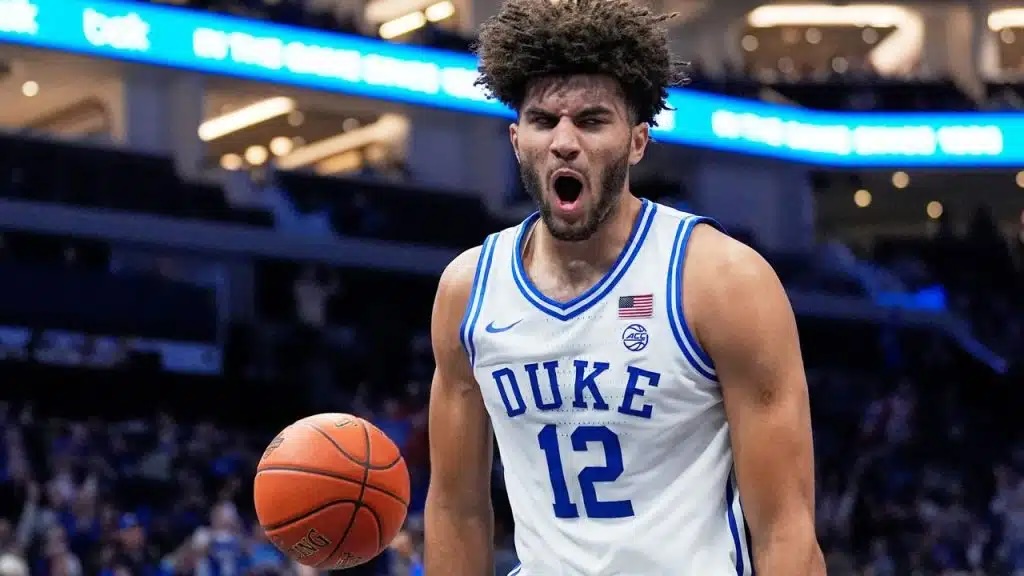
Cameron Boozer — Duke
6'8" | 250 lbs | Power Forward | Born 7/18/2007If this evaluation were based strictly on production, it would be easy to argue that Boozer is the best prospect remaining in the NCAA Tournament. The Duke forward has been dominant statistically, averaging 22.4 points, 10.3 rebounds, and 4.2 assists, while shooting 39.8% from three-point range. He also leads the entire NCAA in box score plus/minus, a reflection of just how consistently he impacts winning possessions on both ends of the floor.
Boozer’s game is built on strength, skill, and feel, rather than elite explosiveness. He scores efficiently inside, rebounds at a high level, and has developed into a capable perimeter shooter. The reason some scouts hesitate to project him as the clear No. 1 pick revolves around questions about NBA ceiling. Boozer’s interior power game has been extremely effective at the college level, but evaluators wonder how that style will translate against bigger and more athletic NBA frontcourts. Compared with prospects like A.J. Dybantsa, Darryn Peterson, and Caleb Wilson, Boozer does not possess the same level of vertical explosiveness. What he does bring is elite production, toughness, and a highly developed feel for the game, which continues to make him one of the most impactful players left in the tournament.
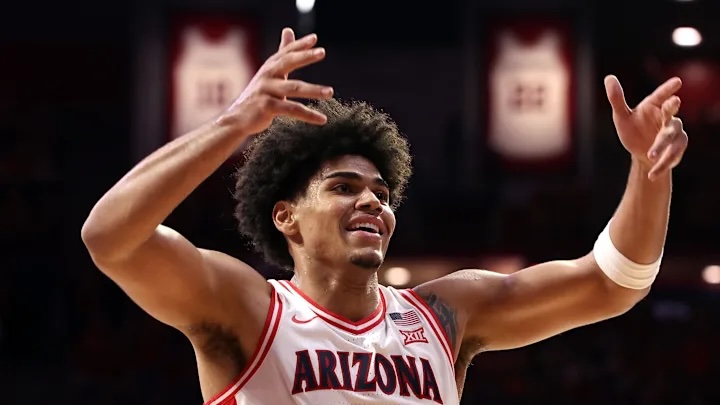
Brayden Burries — Arizona
6'5" | 205 lbs | 6'10" wingspan | Shooting Guard | Born 9/18/2005Burries is one of those players whose approach to the game stands out immediately. He plays with a serious, focused demeanor and gives the impression that he is all about basketball when he steps on the floor. That mindset shows up in his steady production and efficient offensive profile. Burries is averaging 16 points, 4.8 rebounds, and 2.5 assists per game, while shooting 39.2% from three-point range and 80% from the free throw line, numbers that point to a reliable perimeter scorer with solid shot discipline.
Equally important, Burries protects the basketball, recording 90 assists against just 50 turnovers this season, an excellent ratio for a wing scorer who handles the ball regularly. With a 6'10" wingspan at 6'5", he also brings appealing length for the position. Combined with his mature approach and efficient decision-making, Burries profiles as a disciplined guard whose mentality and feel for the game help elevate his overall impact.
Chris Cenac Jr. — Houston
6'10" | 240 lbs | 7'4" wingspan | PF/C | Born 2/1/2007Cenac brings an intriguing blend of size, rebounding instincts, and perimeter touch. At 6'10" with a massive 7'4" wingspan, he has the physical profile to impact the game at either power forward or center, and he already shows a rebounder’s nose for the ball. Cenac is averaging 9.6 points and 7.8 rebounds per game, and what makes his profile particularly interesting is that he pairs that interior presence with a smooth outside shooting stroke, converting 34.5% from three-point range.
Defensively, Cenac has been extremely effective within Houston’s structure, leading the Big 12 in defensive rating, which reflects both his rim presence and positional awareness. His 62% free throw shooting still needs improvement, but the mechanics of the shot look solid enough to suggest potential growth. The offensive decision-making remains a developmental area. He currently has more turnovers than assists. However, the overall package of size, rebounding, defensive impact, and emerging floor spacing makes Cenac one of the more intriguing frontcourt players still competing in the tournament.
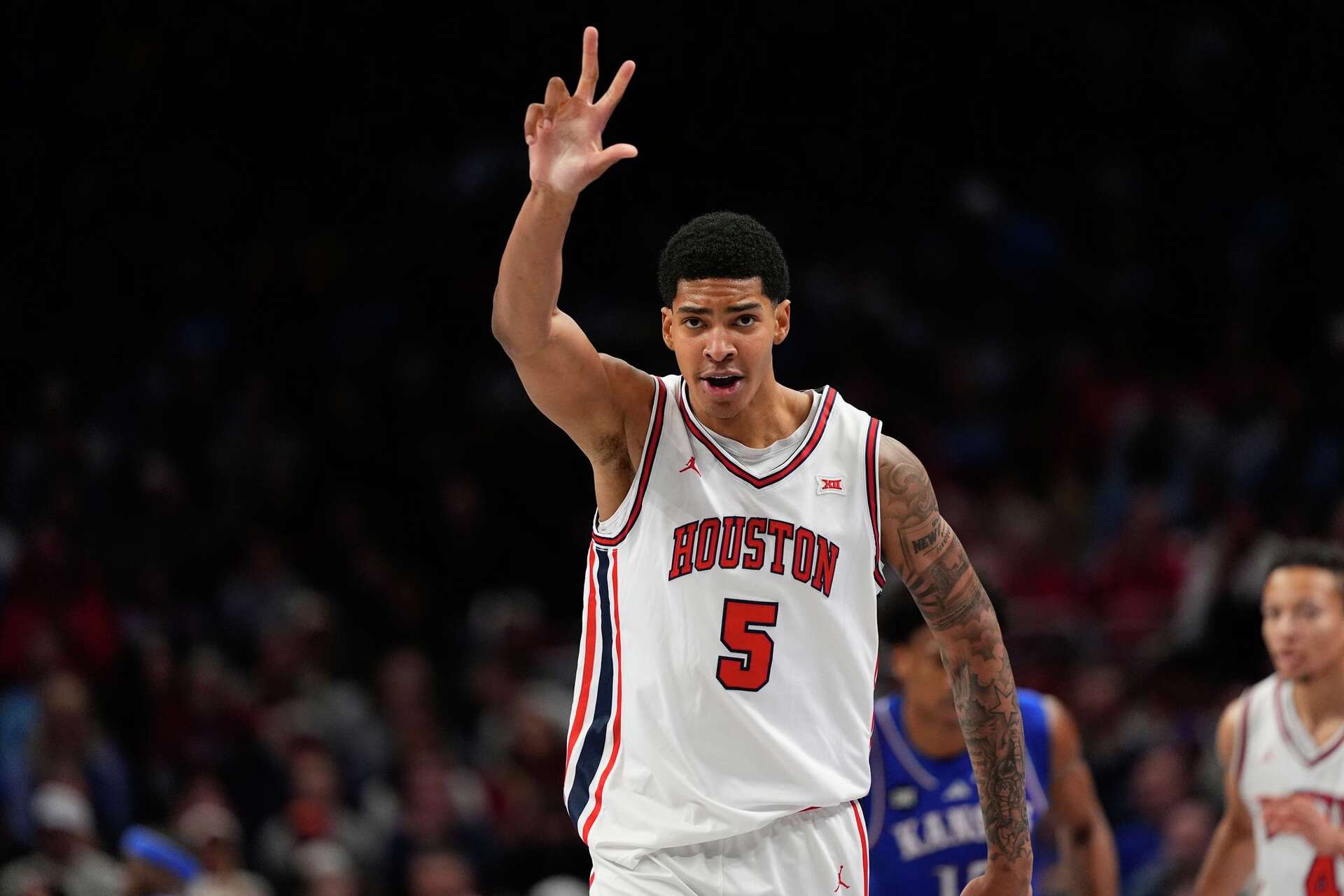
Kingston Flemings — Houston
6'4" | 190 lbs | Point Guard | Born 1/3/2007Flemings is one of the most trustworthy lead guards still playing in the tournament. What jumps out immediately is how quickly he processes the game. He reads defenses well and consistently finds ways to get a piece of the paint, which allows Houston’s offense to stay organized and productive. Flemings is averaging 16.2 points, 4.0 rebounds, and 5.2 assists, while shooting 38.8% from three-point range and 84% from the free throw line, giving him a strong efficiency profile for a primary ballhandler.
He also protects the basketball extremely well, posting a 2.84-to-1 assist-to-turnover ratio, an important indicator of his control and decision-making. His impact metrics reinforce the eye test. Flemings currently ranks 2nd in the Big 12 in box score plus/minus, reflecting just how often Houston wins possessions with him on the floor. Between his composure, and shot-making, Flemings is exactly the type of guard who ends up on the annual “I trust ’em” list.
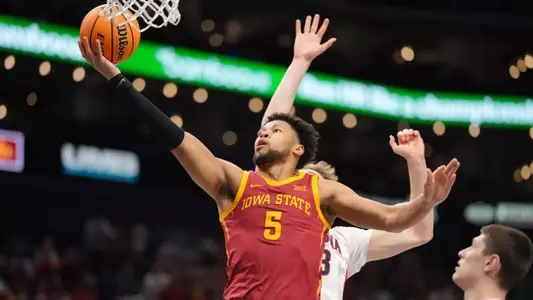
Joshua Jefferson — Iowa State
6'8" | 255 lbs | Power Forward | Born 11/21/2003Jefferson is currently listed as a true game-time decision for Iowa State’s Friday matchup with Tennessee, and his availability could have a significant impact on that game. The Cyclones run a meaningful portion of their offense through Jefferson, a versatile forward who combines strength, skill, and playmaking feel. He is averaging 16.4 points, 7.4 rebounds, and 4.8 assists, production that reflects his ability to influence the game as both a scorer and facilitator.
At 255 pounds, Jefferson has the physicality to operate inside, but he also spaces the floor effectively, shooting 34.5% from three-point range while converting 70% at the free throw line. What truly separates him from many forwards is his passing. Jefferson has the vision and composure to function as an offensive hub, initiating actions and creating opportunities for teammates. His long-term impact metrics underscore that value as well: Jefferson is the career Big 12 leader in box score plus/minus.
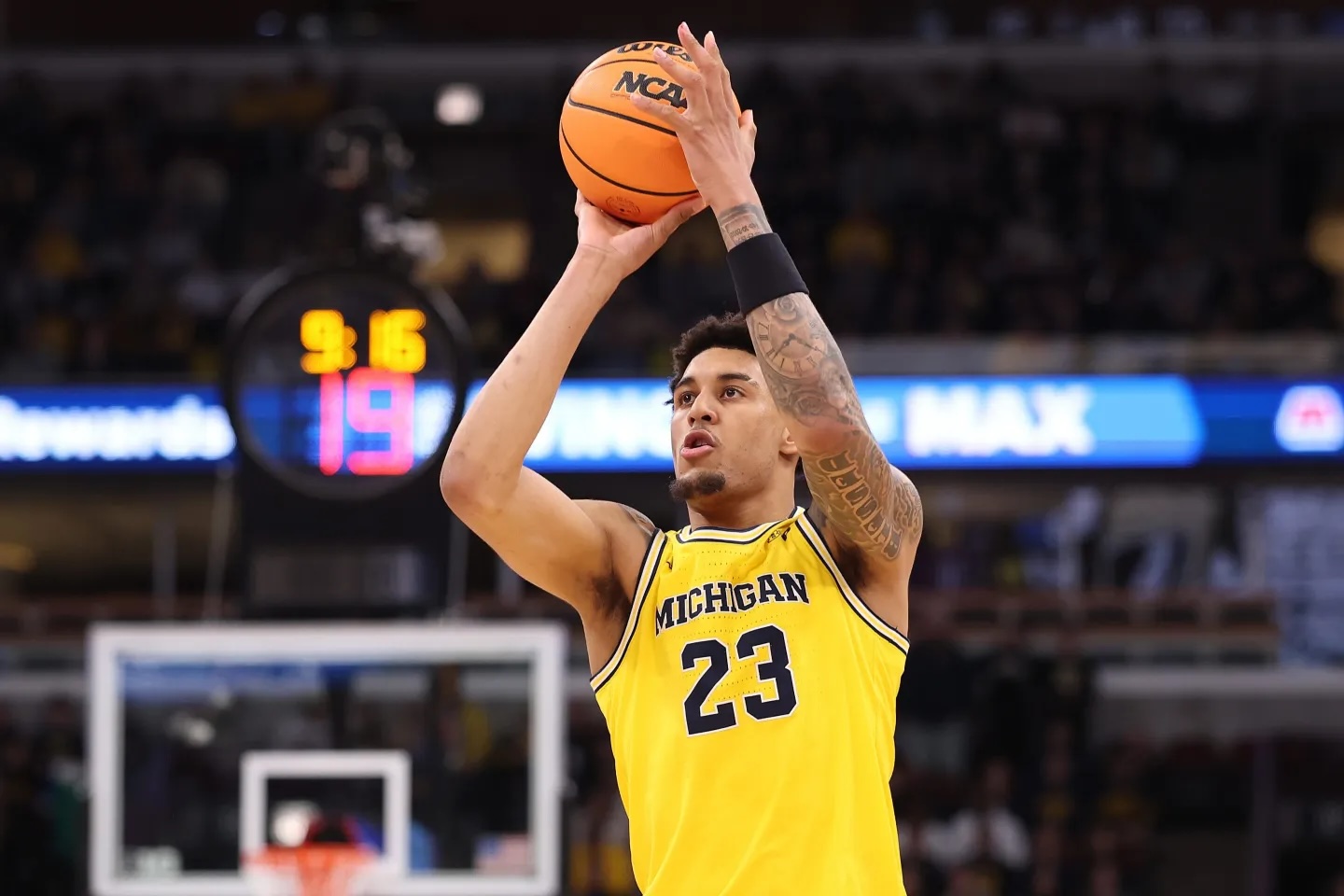
Morez Johnson Jr. — Michigan
6'9" | 235 lbs | Power Forward | Born 1/25/2006Johnson brings a powerful physical profile and has been extremely efficient offensively. He led the Big Ten in field goal percentage at 63.6%, reflecting how effective he is finishing near the basket and scoring in transition. Johnson is averaging 13.4 points and 7.3 rebounds per game, and much of that production comes from his ability to use his strong 235-pound frame to establish position and convert high-percentage opportunities.
The key evaluation question revolves around positional fit at the next level. If Johnson can become a true floor-spacing four, his strength, mobility, and interior finishing would make him a very intriguing frontcourt piece. However, the current sample leaves some uncertainty. He is shooting 37.5% from three-point range, which is encouraging, but he has attempted only 32 three-pointers in 36 games, and we have recently seen him pass up open looks from deep. If the perimeter shooting does not develop into a reliable part of his game, Johnson may project more as a center, which can be challenging at 6'9" despite his strength. The physical tools and finishing ability are clearly there. The long-term question is whether the shooting profile allows him to play the four at NBA spacing levels.
Yaxel Lendeborg — Michigan
6'9" | 235 lbs | 7'4" wingspan | Power Forward | Born 9/30/2002Lendeborg plays with a beautiful blend of power and finesse, and his versatility allows Michigan to run significant portions of the offense through him. Averaging 14.7 points, 6.9 rebounds, and 3.2 assists, he functions as a skilled point-forward who reads the game well and consistently makes the right play. His decision-making stands out in the numbers as well. Lendeborg owns an excellent 2.97-to-1 assist-to-turnover ratio, rare efficiency for a forward who handles the ball as often as he does.
Physically, he has the frame and length to impact the game across multiple positions, measuring 6'9" with a 7'4" wingspan. He finishes with authority in the open court and uses his strength well around the basket. Lendeborg led the Big Ten in box score plus/minus this season. At 23 years old, he is older than many prospects in this class, but that maturity shows up in how polished his game already is. Lendeborg projects as a player who could step into the NBA quickly, with the versatility to play power forward, some small forward, and even small-ball center if needed.
Aday Mara — Michigan
7'3" | 245 lbs | 7'7" wingspan | Center | Born 4/7/2005In our view, Mara may be the most impactful true big man remaining in the tournament when you factor in both ends of the floor. At 7'3" with a massive 7'7" wingspan, he alters the geometry of the game defensively. Mara averages 12 points, 6.9 rebounds, and 2.5 assists, but the defensive numbers only tell part of the story. He officially blocks 2.7 shots per game, yet he changes countless others simply by being present around the rim.
Mara moves with a surprising level of fluidity for his size, and in a league full of unique physical profiles, he certainly fits the “freak” category. One moment that captured his rare coordination came on a behind-the-head dunk against Saint Louis, a play that felt like something we might normally associate with Victor Wembanyama. To be clear, Mara is not Wembanyama, and there are still areas of his game that need development, most notably his 54.5% free throw shooting and some overall polish offensively.
Still, the combination of elite size, rim protection, passing instincts, and defensive presence makes Mara one of the most intriguing big men in the tournament. Given that profile, we find it hard to understand why some evaluators still frame him as merely a second-round type prospect.
Koa Peat — Arizona
6'7" | 235 lbs | 6'11" wingspan | LPS | Born 1/20/2007The most appealing elements of Peat’s profile right now are his youth and his efficiency, particularly his 53% field goal percentage. At just 19 years old, Peat is still one of the youngest players in this group, and that developmental runway matters. He is producing 13.7 points, 5.5 rebounds, and 2.7 assists per game, showing flashes of versatility and the ability to contribute across multiple areas of the box score.
The long-term projection is where questions begin to surface. Peat currently profiles as an LPS (low percentage shooter), shooting 31.6% from three-point range, and his 61.1% free throw percentage does not yet suggest a clear path toward becoming a reliable floor spacer. His physical profile, 6'7" with a 6'11" wingspan, aligns more naturally with an NBA small forward, and past Hoop Obsession studies have shown that the average wingspan for a small forward on a winning NBA team tends to fall in the 6'10"–6'11" range, so he fits that template physically.
The question becomes how Peat ultimately creates value offensively at the NBA level. If the perimeter shooting develops, his size, strength, and efficiency could translate well on the wing. If not, the positional fit becomes more complicated. For now, Peat remains an intriguing long-term developmental prospect whose youth and production keep evaluators interested.
Labaron Philon — Alabama
6'3" | 175 lbs | 6'6" wingspan | SG | Born 11/24/2005Philon is one of our personal favorites among the players still competing in this tournament. He plays with a certain flair and creativity that jumps out immediately. The occasional no-look pass and improvisational playmaking reflect a player who truly feels the game. Philon is producing 21.6 points, 3.4 rebounds, and 5.0 assists per game, while also contributing 1.4 steals, showing that he can impact the game both as a scorer and secondary creator. His efficiency is notable as well, ranking 5th in the SEC in effective field goal percentage, an impressive mark for a high-usage guard.
At this stage of his development, Philon profiles more as a two-guard than a true point guard, but he is not far off from being able to handle full-time lead responsibilities. His vision, creativity, and overall feel for the game are clear strengths. The primary area that needs improvement is on the defensive end, where his current –3.9 defensive differential indicates room for growth. Even so, Philon’s scoring ability, and playmaking instincts make him one of the more entertaining and intriguing guards remaining in the tournament.
Tarris Reed Jr. — Connecticut
6'10" | 260 lbs | Center | Born 8/5/2003Reed delivered one of the most dominant performances of the opening round of the NCAA Tournament, exploding for 31 points and 27 rebounds in UConn’s win over Furman. That game was a perfect snapshot of what he brings: overwhelming physical presence, elite rebounding, and a constant interior force. For the season, Reed is averaging 14.2 points, 8.9 rebounds, and 2.4 assists, while shooting a highly efficient 62.8% from the field.
Defensively, Reed’s impact is even more significant. He recorded the best defensive rating in the Big East, and the Huskies are 8.5 points per 100 possessions better defensively when he is on the floor, a massive on/off indicator of his value protecting the paint and controlling the glass. He also finished second in the Big East in box score plus/minus, reinforcing how consistently his presence translates into winning possessions.
The primary offensive limitation remains at the free throw line, where Reed is converting 58.6%, but his interior scoring efficiency and defensive dominance make him one of the most physically imposing big men remaining in the tournament.
Dailyn Swain — Texas
6'7" | 200 lbs | Small Forward | Born 7/15/2005Swain is a player whose improvement this season may not yet be fully believed by the scouting community. As a career 29% three-point shooter, many evaluators remain cautious about the 35.2% three-point mark he has posted this season at Texas. However, the overall production and supporting indicators suggest there may be real growth taking place. Swain is averaging 17.4 points, 7.5 rebounds, and 3.5 assists, showing the ability to impact the game across multiple areas.
Where Swain already draws strong interest is on the defensive end. He profiles as one of the better wing defensive prospects in this draft class, combining length, instincts, and activity. His 1.7 steals per game and +3 defensive differential reflect that impact. Swain currently ranks 4th in the SEC in box score plus/minus. Offensively, his 82.1% free throw shooting is an encouraging indicator that the improved perimeter shooting may be legitimate, as it supports the idea that he possesses real touch. If the outside shot continues to hold, Swain’s combination of rebounding from the wing, and defensive versatility makes him a very intriguing NBA prospect should he decide to declare.
Keaton Wagler — Illinois
6'6" | 185 lbs | Point Guard | Born 2/3/2007Wagler is a skilled young guard. The Illinois freshman is averaging 17.8 points, 4.9 rebounds, and 4.4 assists, while shooting an impressive 40.8% from three-point range and 79.9% from the free throw line. He also takes good care of the ball, posting a 2.48-to-1 assist-to-turnover ratio. Physically, Wagler still looks like a player whose body has room to develop. His very thin frame and babyface appearance reinforce that he is still early in his physical maturation, even though he stands 6'6" with good positional height for a lead guard. One interesting part of his profile is his ability to draw fouls, ranking 5th in free throw attempts, which is impressive considering he still needs to add significant strength.
At 19 years old, Wagler may still require time before making a full impact at the NBA level, but the combination of size, shooting efficiency, foul-drawing instincts, and developing playmaking ability makes him an intriguing long-term guard prospect.
Final thought.
As the tournament progresses, performances will inevitably shift the conversation around these players. Some will elevate their stock. Others will reveal the limitations that still need development. But each of the players on this list has already demonstrated something we value highly at Hoop Obsession: the ability to contribute to winning possessions within real roles. March rarely crowns the best individual player. More often, it reveals the players who understand how to win.